Computer generated images are often used in the medical world, their most common use is giving a simple visual representation of complex biological structures. These are used when teaching new medical students but they are also used when showing a patient.
The following is a realistic beating heart made by the power of CGI, this could be used to show future surgeons and other students what they will be dealing with. CGI models have many advantages over physical models in that they can be a lot more simple or a lot more complex depending on the audience. The power of CGI also enables the user to input different factors to the simulation. For example, a doctor or professor could add a heart disease to the simulation in order to show a patient what is wrong or to show a student what to look out for.

Another example of when this is useful is when explaining a medical problem so that people understand it clearly. The video below is used by Orthopaedic Consultants and other health professionals to show clearly and simply what the problem is, why its there and how to deal with it.
Scans and X-rays alone are not CGI so much as specialised imagery, however, modern CT scans produce a 3D model of the body, these can help patients to understand what their body looks like and why they are undergoing the treatment. As CGI in the medical world is a new and growing endeavour into using IT the future of it is very exciting. Patient specific CGI models will become very useful in computer aided surgery. Certain assets of the human body can vary massively from patient to patient, having access to a model that is atomically correct to the patient is very helpful when preparing for the operation, it is also exciting to think about how robots will have the ability to perform perfect precision operations without making any human errors. Robotic surgery exists but is limited, AI combined with CGI can create surgeons that do not make mistakes.

In an interview with a nurse practitioner, I asked how she would like to see CGI used in the future, her main concern was with training. Staff must be trained to work with new technology, when members of staff miss training or are never offered training they have to learn how to use the technology on the job which can result in many issues and slow down work drastically, her team suffers with many technical issues at the current time and she fears introducing new technology would cause problems unless staff is dealt with possible, however, she was rather excited when discussing the possibility of patient unique holographic models, she thought that the future was amazing yet scary and wasn’t sure of the practicality of some of the things mentioned.
With the current advancements to technology the future for CGI in the medical world is a broad and unknown subject and it is exciting to thing about.
A brief history of CGI
CGI is often used in the world of cinema to portray things that cannot be made in real life, things of immense size or complexity or things involving technology that has not yet been invented, this can include weapons, creatures and even entire cities such as “Asgard” in “Thor” (See below) or “Minas Tirith” from “The Lord of The Rings”.
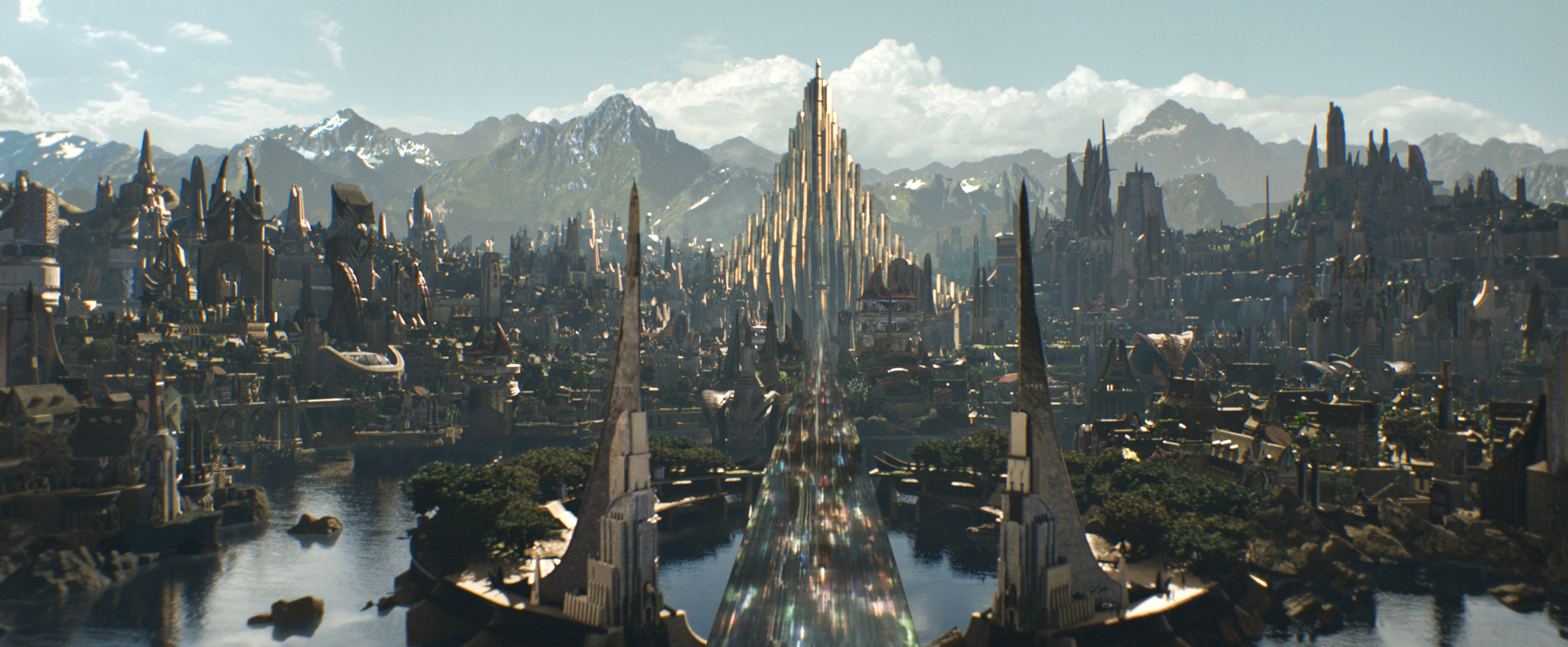
Giving creators the ability to let their creativity flow out onto an unlimited canvas allows them to create and bring to life things that could never have existed without CGI such as dragons, gods, buildings and animated chaos such as explosions or collateral damage, for example, if a movie involves the destruction of New York the creator can use CGI instead of actually doing damage to an entire city.
CGI was first used in 1973 in the film “WestWorld” used to create a mock-up thermal image POV shot, this was however, 2D and consisted of only a few moving pixels, however, it was not long until a Hollywood executive found out about CGI and deiced to implement it in 1973 into WestWorld’s sequel, “FutreWorld”. One of the creators of both these movies went on to be the co-founder of Pixar, the leading animation and CGI company in movies.
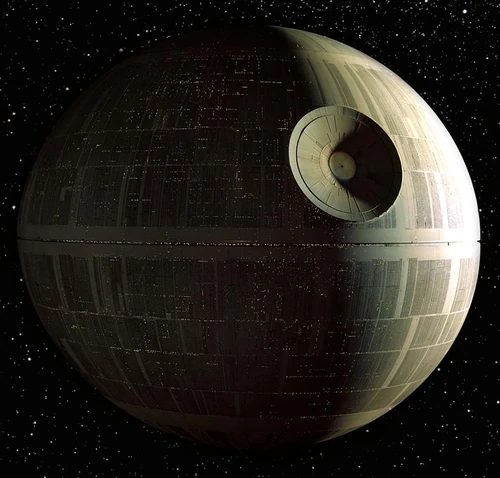
In 1977 George Lucas and his company “LucasFilm” worked to create the first animated wire-frame model. A wireframe is a skeletal 3D model in which only lines and points are represented, this technologoy was used in the film “Star wars – The Phantom Menace” to bring to life the spacecraft that where to large to make models of, the most famous example of this is of course, the death star:
In 1984, the famous animation company created their first short-film “The adventures of André & Wally B.” This simple animation will spark ideas and revolutionise animated film, as this very team went on to create the first full length animated film.

In 1989, developers took animation to the next level by animating entirely computer generated water and water effects, this took a lot of time and effort to animate but it brought a new level of detail and ambition to CGI in movies.
In 1995 “Toy Story” was released, Pixar Animation creates and Disney releases the first full length CGI film, it makes 373.6 million USD in box office and is a huge success, from then on CGI is used widely in the film industry and Pixar-Disney goes on to be one of the most successful film making companies ever.

In 2002, J.R.R Tolkien’s “Lord of the Rings – The Two Towers” was brought to life and to cinemas by Peter Jackson and an excellent cast of actors, during the scenes that included the character “Gollum” the next leap in technology was used. “Motion Capture”, Motion Capture is recording patterns of movement, usually recording an actor’s movements for the purpose of animating a digital character. They used this to method to create the character Gollum, the technique is then used in all of its sequels and many other movies.
The future of CGI is broad and unknown, my prediction is that it will go towards projection mapping, virtual reality and holograms, implementing this into cinema will not be an easy task but i believe it will enhance the experience of the cinema. This is much needed as services such at Netflix are hurting the cinema industry.
By Thomas Cornelisse
 Computer Generated Imagery